What driver’s license is required to rent a car in Thailand?
Many tourists believe they can "negotiate on the spot" in Thailand, but when it comes to driving, the rules are stricter than they seem. Even the friendliest police officers check documents, and insurance companies only accept an International Driving Permit. Therefore, the question of what license is required and how to use it correctly arises for almost everyone planning to rent a car.
Car rental in Thailand in 2025 requires careful consideration: the main thing is to prepare the necessary documents in advance.
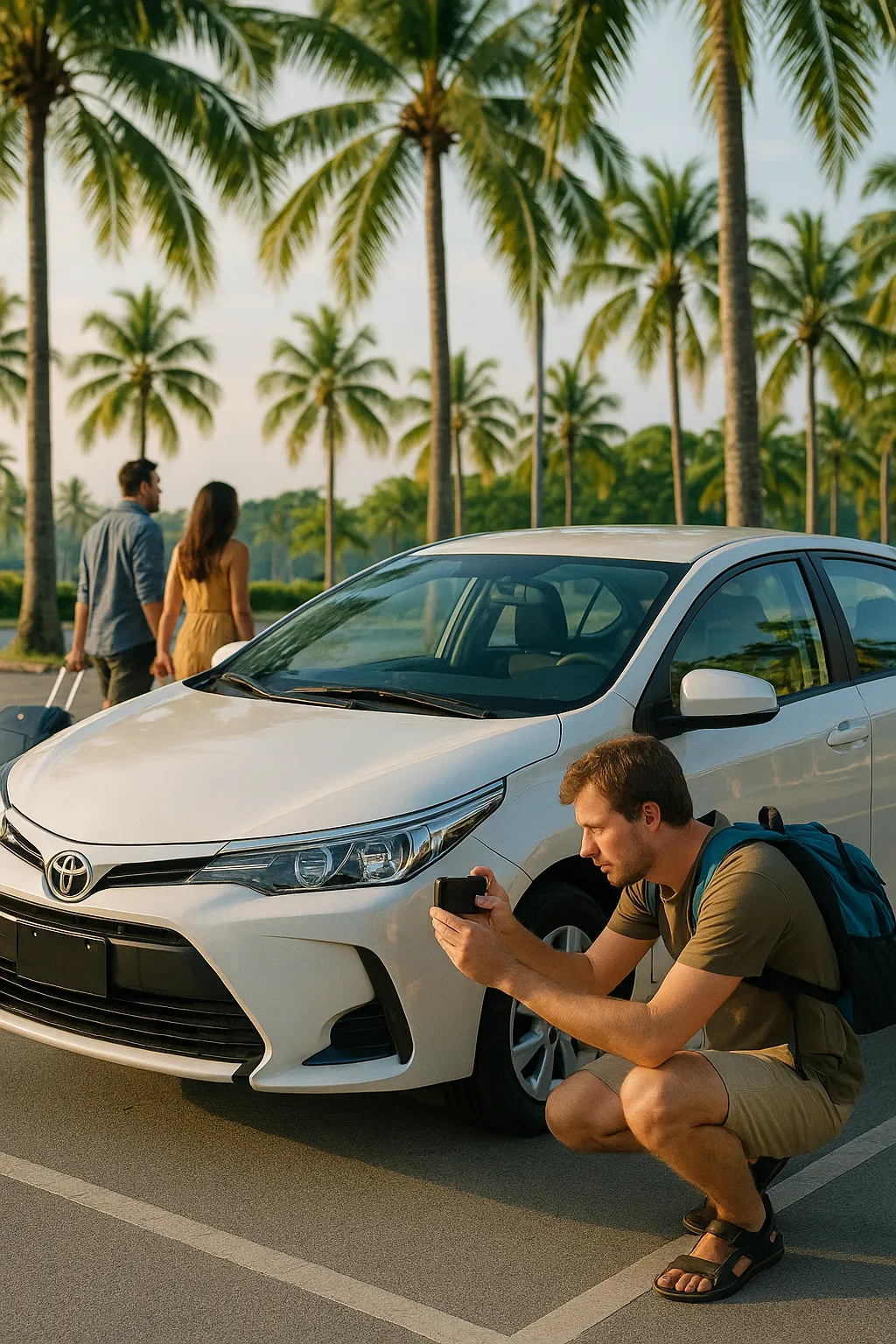
Sometimes the journey begins early in the morning, when the sun barely touches the hood and the mirrors reflect the awakening city. Windshield wipers are already washing the sidewalks, the smell of fried rice mingles with the salty breeze.
You get into the car, turn on the air conditioning, and feel the noise of the street fading behind you. At a traffic light, a guy on a moped slows down next to you, nodding with a slight smile—as if to say, "Let's go, it's going to be a long day." Everything around moves slowly but surely, just like local life.
Renting a Car in Thailand: Do You Need a Driving License?
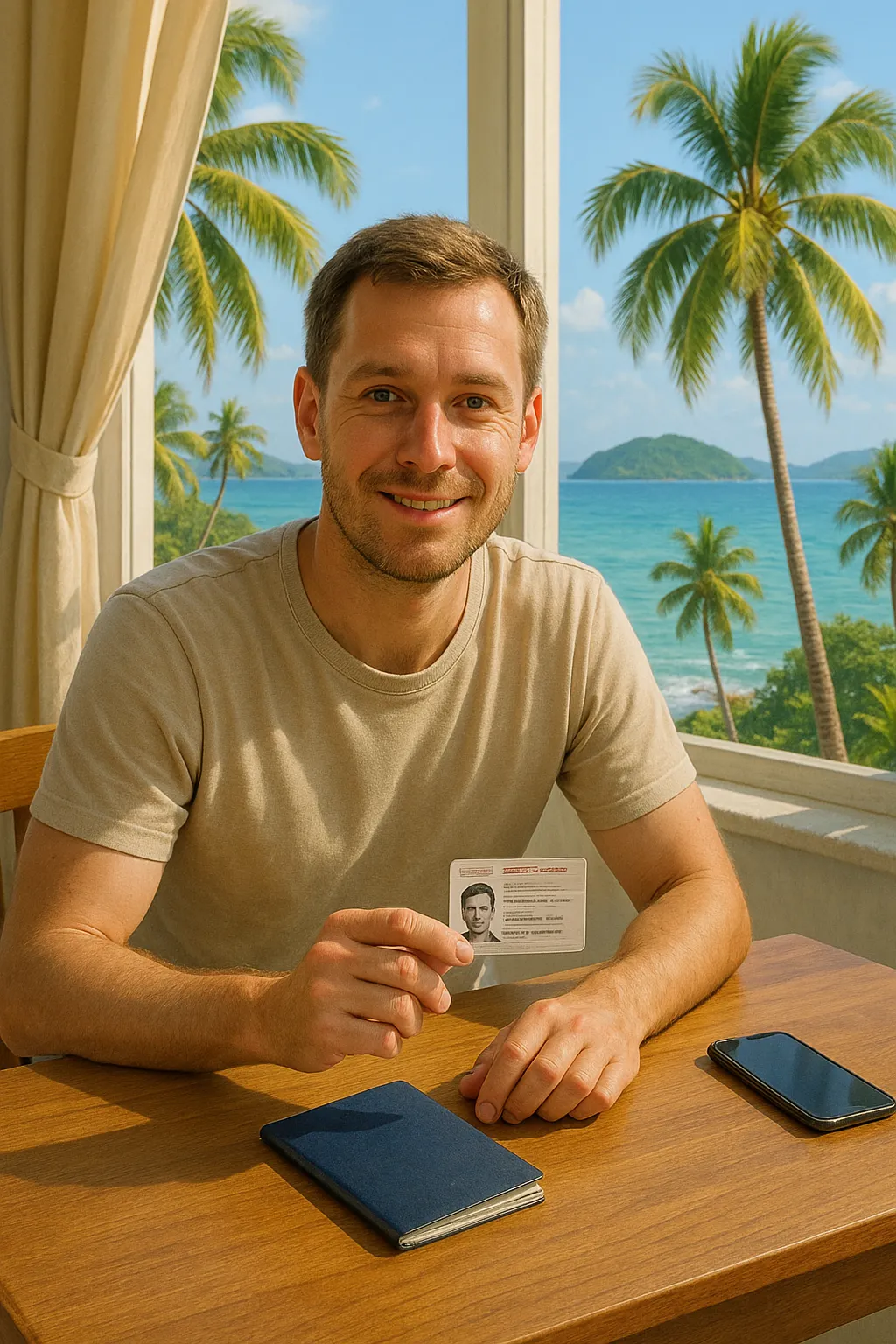
To sign a rental agreement, a passport is sufficient. However, to drive a car (unless you want to break the law), you need a driver's license of the appropriate category. Furthermore, if you are stopped by local police, you may be asked to present an International Driving Permit (IDP). It is important that it has a category "B" license, which allows you to drive passenger cars, or a category "A" license for motorbikes.
According to Thai law, drivers are required to carry an IDP, and this document is considered the official driving license. However, in practice, most tourists arrive with a regular national license, and in most cases, the police turn a blind eye to this as long as the license details are in Latin characters and the category is clear.
📍 However, without an IDP, you are driving at your own risk.
We recommend obtaining an IDP in advance. With an international driver's license, you won't have any problems with the police or insurance companies.
🚨 Important to remember:
• The fine for driving without an IDP is small (500-1000 baht), but is issued for each repeat offense;
• In the event of an accident without an international driver's license, the insurance company will not cover the damage, even if the other driver is at fault;
• Police are polite and courteous, but they strictly adhere to the law.
Therefore, you can rent a car in Thailand with a regular national driver's license, but obtaining an IDP is a guarantee of legality, safety, and peace of mind on the roads.
📄 What you should know before driving:
An international driver's license is valid for three years from the date of issue;
If you only have a national driver's license, the police may issue a fine of around 500 baht;
In the event of an accident without an IDP, the insurance company will not cover the damage;
💡 Interesting fact: Thai police officers almost never shout—even when stopped, they greet and smile, and the conversation takes less than a minute.
Motorbike rentals in Phuket operate under the same rules: without a license, you can only ride as far as the first police checkpoint. And if you get stopped, pay the fine on the spot and continue on. We're not advocating this, but you should know.
Behind the wheel, you feel like time flows differently.
Drivers here take their time—they drive as if enjoying every meter of the road. Cars, tuk-tuks, and scooters weave through the narrow streets, with the glittering horizon ahead. Sometimes you have to stop to let a pack of dogs or an old lady cross the street with a basket of papayas.
The traffic is dense but calm: everyone understands the main goal is to get there, not to overtake. Even the traffic jams seem part of a ritual, where every minute is filled with the smell of the sea and hot asphalt.
Renting a car in Thailand with a National driving license
Many tourists arrive in Thailand with a regular National license and believe that this is sufficient. Technically, yes, but in practice, everything depends on the situation and the specific police officer. National licenses are usually accepted if the details are duplicated in Latin characters and the category is clearly visible, however, in disputed cases, an International Driving Permit (IDP) remains the decisive document.
📋 Important things to remember:
• If you are stopped without an IDP, you can pay the fine on the spot and continue your trip;
• If you have an IDP, police officers often simply smile and let you go;
💡 Tip: Apply for an IDP in advance—this will take little time and will relieve unnecessary stress during your trip.
🛣 About traffic: Thai roads are smooth and well-maintained, but often narrow, with left-hand traffic and serpentine roads. Don't rush, keep your distance, and slow down on descents—especially in mountainous areas.
🚗 Common mistakes newbies make:
• using turn signals "out of habit"—here, this is a "yield" signal;
• driving with hazard lights on—in Thailand, this indicates a breakdown or sudden braking;
• not slowing down near temples—on local roads, this is a sign of respect.
💡 Interesting: in Thailand, honking your horn isn't a greeting, but a sign of alarm. Therefore, local drivers almost never honk their horns without a serious reason. Except for one case—when passing "sacred sites." In such cases, three short beeps are normal. One such spot in Phuket is at the top of a mountain pass on the road leading from Patong to the center of the island.
Those who have experience driving on Thai roads know that the most important thing is not speed, but attention. In the evening, when fog settles on the highway, the headlights seem to dissolve into the haze. A café with neon signs flashes by, and nearby, cars festooned with garlands and souvenirs are parked. Sometimes the rain pours down hard, and the windshield wipers work nonstop, but even in such weather, traffic never stops. Drivers seem to sense the road ahead—they turn smoothly, yield, and flash their headlights, as if winking at the world. Here, things are handled gently, without rushing.
How to rent a car in Thailand without a credit card
With our company, you can rent a car or a motorbike without a credit card—just for cash! It's that simple! However, if you prefer, we also accept credit and debit cards. You can choose any payment method convenient for you.
💡 Tip: If you pay in cash, take photos of the bills when you hand them over—this will avoid disputes upon return. The cost of renting a motorbike or car in Phuket always depends on the length of stay and model, but the rules are the same everywhere.
Sometimes it all starts with a simple gesture—a handshake and a smile.
They hand you the keys, show you where the car is parked, and you feel a slight thrill, as if about to embark on a journey into the unknown.
The smell of the new interior mingles with the humid air of the street, and people with umbrellas and fruit pass by outside the window.
The first turn, the first intersection—and the island seems to open its doors.
Pineapples are sold along the side of the road, garlands of flags hang over the road, and ahead lies the blue sky and the sound of the sea. It's simple: you and the road, and no one is stopping you from going wherever you want.
Conclusion
Now you know what license you really need to rent a car in Thailand and why an International Driving Permit isn't a formality, but a guarantee of a stress-free trip.
It will save you from fines, simplify communications with the police, and give you confidence on the road.
📄 Prepare your documents in advance—then all that's left to do is turn on the air conditioning, choose your favorite music, and enjoy the sunny road.
Car rental in Phuket starts with one step: the right documents and confidence behind the wheel.